Behind the Verses
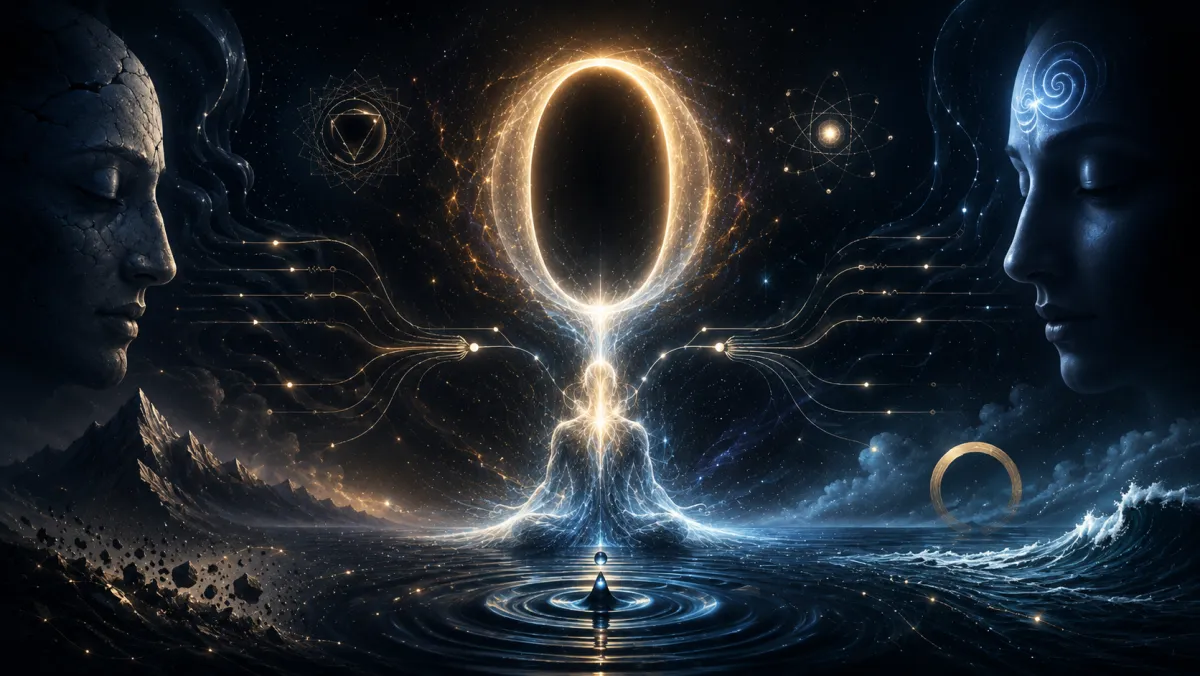
This poem is the exhausted plea of the human soul yearning to return to the formless Creator. It weaves together Sankhya philosophy — Prakriti and Purusha — with the longing for dissolution, framing liberation not as a mercy granted from outside, but as a truth already written within the soul.
I. The Void as Birthright
The poem opens with a paradox of the Supreme: the Infinite rests in the divine embrace, yet the Divine also resides in the most subtle essence. अनंत तुम्हारी बाहों में, सूक्ष्मता में निवास तुम्हारा. The soul, trapped in the mortal realm, then makes a bold claim — शून्यता पे है अधिकार हमारा — “I have a rightful claim to the Void.” This is not a request for heaven, reward, or escape. It is a demand for return — return to the stillness from which all movement arises.
II. The Burden of Immortality and Matter
The second stanza reframes immortality not as a blessing, but as a burden. The embodied being wanders from birth to birth, carrying the weight of continuity. In Sankhya thought, manifested experience arises through the association of Prakriti, the material principle, and Purusha, pure witnessing consciousness. This association creates the field of experience — body, mind, senses, memory, identity, and desire. But for an awakened consciousness, this union begins to feel heavy. Existence itself begins to feel like resistance.
III. Conquering the Senses
The line इंद्र पर हो विजय हमारी carries a layered meaning. On the surface, Indra is the king of the gods. But the word also evokes Indriyas — the senses through which the world enters the mind. The poem is not asking for victory over an external enemy. It is asking for victory over the tyranny of perception: the restlessness of sight, sound, memory, desire, fear, and attachment. True conquest is not domination of the world. True conquest is freedom from being dominated by the world.
IV. The Path of Dissolution
In the final stanza, the plea reaches its peak: विलय पथ अब प्रबल करो — strengthen the path of dissolution. The soul asks for Vilaya (विलय) — dissolution, merger, return. It asks to become the drop that merges back into the ocean, not because the drop hates itself, but because it remembers the ocean. Liberation from the cycle of birth and death is claimed not as a favor, but as a birthright: शून्यता का हूँ मैं अधिकारी.
The Invention of the Void
When we observe the physical universe, we find motion everywhere. Even what we call empty space is not a simple nothingness. The vacuum of physics is not a blank absence; it is a field of possibility, fluctuation, and latent energy.
The physical world — what Sankhya calls Prakriti — is restless by nature. It vibrates, transforms, combines, separates, decays, and reappears. Matter does not easily reveal perfect stillness.
So how did the human mind arrive at Zero? We did not invent emptiness. We invented a way to name it.
Zero became more than a number. It became a symbol for absence, balance, reset, stillness, and the unmanifest. It gave language to what the senses cannot hold: a state where nothing is accumulated, nothing is owed, nothing is becoming.
In that sense, Zero is not merely mathematical. It is metaphysical. It is the mind’s attempt to describe what lies beyond movement.
Thermodynamics and Moksha
In physics, difference creates movement. When two points are held at different electrical potentials, a voltage exists — and that difference can drive current. When heat is unevenly distributed, energy flows. When a system is excited, it tends to release energy and move toward a more stable state.
This is a useful metaphor for Samsara. Samsara is the condition of difference: self and world, desire and fulfillment, birth and death, memory and fear, attachment and loss. The embodied soul lives inside potential difference. It is pulled by contrast, tension, and incompleteness.
Many physical systems naturally relax toward equilibrium. Hot objects cool. Excited electrons return to lower energy states. Disturbed water settles. A stretched spring seeks release.
If the physical universe seeks equilibrium, what is the equivalent for consciousness? It is Moksha. Moksha is not a geographical destination. It is not somewhere the soul travels after death. It is the collapse of inner voltage. It is the end of compulsive duality. It is the point at which the restless current of becoming returns to stillness.
When the difference dissolves, the struggle dissolves. The system returns to Zero.
Engineering the Mind: Kirchhoff Meets Patanjali
Understanding this philosophically is one thing. Practicing it in the middle of daily life is another. How does one remain still while responsibilities, conflicts, anxieties, and expectations continue to flow?
Sage Patanjali gives the answer in the Yoga Sutras: “Yogas chitta vritti nirodhah.” Yoga is the cessation of the fluctuations of the mind. This stillness has an unexpected parallel in electrical engineering: Kirchhoff’s Current Law.
Kirchhoff’s Current Law — The Node of the Mind:
Σ I = 0
The algebraic sum of all currents entering and leaving a node must equal zero.
Now imagine the mind as a node in a circuit. The currents entering the node are the pressures of life: work, family, illness, duty, fear, hope, deadlines, ambition, and memory. We cannot stop these currents from entering. That is the price of living in Prakriti.
But suffering begins when the current enters and does not leave. A conversation becomes resentment. A responsibility becomes identity. A problem becomes fear. A temporary event becomes a permanent wound.
Nirodhah is not the act of cutting all wires and escaping the world. It is the art of allowing experience to pass through without leaving residue. You act. You respond. You solve. You care. But you do not accumulate.
When what enters is processed and released, the net disturbance at the core remains Zero. This is not passivity. It is perfect conductivity.
The Spiritual Practice of Zero
You do not need to abandon the world to find the Void. You do not need to reject the body, the family, the profession, the struggle, or the responsibilities of daily life. The circuit may remain active. The currents may continue to flow. The world may continue to demand response.
But within the node, there can be no accumulation. This is the discipline of liberation: to live fully without becoming trapped by what passes through you.
The soul does not beg for peace.
It remembers peace.
It demands what was always its own —
the Zero it never stopped being.
पंक्तियों के पीछे
यह कविता उस मानव आत्मा की थकी हुई याचना है जो निराकार सृष्टिकर्ता में लौट जाना चाहती है। यह सांख्य दर्शन — प्रकृति और पुरुष — को विलय की चाह के साथ बुनती है, और मुक्ति को बाहर से मिली किसी कृपा के रूप में नहीं, बल्कि आत्मा के भीतर पहले से लिखे एक सत्य के रूप में प्रस्तुत करती है।
१. शून्यता: जन्मसिद्ध अधिकार
कविता का आरंभ परम सत्ता के एक विरोधाभास से होता है: अनंत उस दिव्य आलिंगन में विश्राम करता है, फिर भी वही दिव्यता सूक्ष्मतम सार में निवास करती है। अनंत तुम्हारी बाहों में, सूक्ष्मता में निवास तुम्हारा। मृत्युलोक में बंधी आत्मा फिर एक साहसिक दावा करती है — शून्यता पे है अधिकार हमारा। यह स्वर्ग, पुरस्कार या पलायन की याचना नहीं है। यह लौटने की माँग है — उस ठहराव में लौटने की, जहाँ से समस्त गति उपजती है।
२. अमरता और पदार्थ का भार
दूसरा छंद अमरता को वरदान नहीं, भार के रूप में देखता है। देहधारी जीव जन्म-जन्म भटकता है, निरंतरता का बोझ ढोता हुआ। सांख्य विचार में, अनुभव का प्रकटीकरण प्रकृति — भौतिक तत्व — और पुरुष — शुद्ध साक्षी चेतना — के संयोग से उत्पन्न होता है। यह संयोग अनुभव का क्षेत्र रचता है: देह, मन, इंद्रियाँ, स्मृति, पहचान और इच्छा। पर जाग्रत चेतना के लिए यह मिलन भारी लगने लगता है। अस्तित्व स्वयं एक प्रतिरोध जैसा अनुभव होने लगता है।
३. इंद्रियों पर विजय
पंक्ति इंद्र पर हो विजय हमारी में अर्थ की कई परतें हैं। ऊपर से, इंद्र देवताओं के राजा हैं। पर यह शब्द इंद्रियों की ओर भी संकेत करता है — वे द्वार जिनसे संसार मन में प्रवेश करता है। कविता किसी बाहरी शत्रु पर विजय नहीं माँग रही। वह धारणा के अत्याचार पर विजय माँग रही है: दृष्टि, ध्वनि, स्मृति, इच्छा, भय और आसक्ति की बेचैनी पर। सच्ची विजय संसार पर आधिपत्य नहीं है। सच्ची विजय संसार के आधिपत्य से मुक्ति है।
४. विलय का पथ
अंतिम छंद में याचना अपने चरम पर पहुँचती है: विलय पथ अब प्रबल करो। आत्मा विलय माँगती है — घुल जाना, मिल जाना, लौट जाना। वह वह बूँद बनना चाहती है जो सागर में लौट जाए — इसलिए नहीं कि बूँद स्वयं से घृणा करती है, बल्कि इसलिए कि उसे सागर याद है। जन्म-मृत्यु के चक्र से मुक्ति कोई कृपा नहीं, जन्मसिद्ध अधिकार मानी जाती है: शून्यता का हूँ मैं अधिकारी।
शून्य का आविष्कार
जब हम भौतिक ब्रह्मांड को देखते हैं, हमें हर ओर गति मिलती है। जिसे हम रिक्त अंतरिक्ष कहते हैं, वह भी कोई सरल शून्यता नहीं है। भौतिकी का निर्वात कोरा अभाव नहीं; वह संभावना, कंपन और सुप्त ऊर्जा का क्षेत्र है।
भौतिक जगत — जिसे सांख्य प्रकृति कहता है — स्वभाव से ही चंचल है। वह कंपित होता है, रूपांतरित होता है, जुड़ता है, बिखरता है, क्षय होता है, और पुनः प्रकट होता है। पदार्थ सहजता से पूर्ण ठहराव प्रकट नहीं करता।
तो मानव मन शून्य तक पहुँचा कैसे? हमने रिक्तता का आविष्कार नहीं किया। हमने उसे नाम देने का तरीका खोजा।
शून्य केवल एक संख्या से कहीं अधिक बन गया। वह अभाव, संतुलन, पुनरारंभ, ठहराव और अप्रकट का प्रतीक बन गया। उसने उसे भाषा दी जिसे इंद्रियाँ पकड़ नहीं सकतीं: वह अवस्था जहाँ कुछ संचित नहीं, कुछ शेष नहीं, कुछ बन नहीं रहा।
इस अर्थ में शून्य केवल गणितीय नहीं है। वह तत्वमीमांसीय है। वह मन का वह प्रयास है जो गति के परे जो कुछ है, उसे वर्णित करना चाहता है।
ऊष्मागतिकी और मोक्ष
भौतिकी में अंतर ही गति उत्पन्न करता है। जब दो बिंदुओं पर विद्युत विभव भिन्न होता है, वोल्टेज उत्पन्न होता है — और वही अंतर धारा को प्रवाहित कर सकता है। जब ऊष्मा असमान रूप से बँटी हो, ऊर्जा बहती है। जब कोई तंत्र उत्तेजित होता है, वह ऊर्जा मुक्त कर अधिक स्थिर अवस्था की ओर बढ़ता है।
यह संसार के लिए एक उपयोगी रूपक है। संसार अंतर की अवस्था है: स्व और जगत, इच्छा और पूर्ति, जन्म और मृत्यु, स्मृति और भय, आसक्ति और हानि। देहधारी आत्मा विभवांतर के भीतर जीती है। वह विरोध, तनाव और अपूर्णता से खिंचती रहती है।
अनेक भौतिक तंत्र स्वाभाविक रूप से संतुलन की ओर शिथिल होते हैं। गर्म वस्तुएँ ठंडी होती हैं। उत्तेजित इलेक्ट्रॉन निम्न ऊर्जा अवस्था में लौटते हैं। विक्षुब्ध जल शांत हो जाता है। खिंचा हुआ स्प्रिंग मुक्ति खोजता है।
यदि भौतिक ब्रह्मांड संतुलन खोजता है, तो चेतना के लिए उसका समतुल्य क्या है? वह है मोक्ष। मोक्ष कोई भौगोलिक गंतव्य नहीं है। वह कोई स्थान नहीं जहाँ आत्मा मृत्यु के बाद जाती है। वह आंतरिक वोल्टेज का ढह जाना है। वह बाध्यकारी द्वैत का अंत है। वह वह बिंदु है जहाँ 'बनते रहने' की बेचैन धारा ठहराव में लौट आती है।
जब अंतर मिट जाता है, संघर्ष मिट जाता है। तंत्र शून्य पर लौट आता है।
मन की अभियांत्रिकी: किरचॉफ़ और पतंजलि
इसे दार्शनिक रूप से समझना एक बात है। दैनिक जीवन के बीच इसका अभ्यास करना दूसरी। जब उत्तरदायित्व, संघर्ष, चिंताएँ और अपेक्षाएँ निरंतर बहती रहें, तब कोई स्थिर कैसे रहे?
महर्षि पतंजलि योग सूत्र में उत्तर देते हैं: “योगश्चित्तवृत्तिनिरोधः।” योग चित्त की वृत्तियों का निरोध है। इस ठहराव का विद्युत अभियांत्रिकी में एक अप्रत्याशित समानांतर है: किरचॉफ़ का धारा नियम।
किरचॉफ़ का धारा नियम — मन की संधि:
Σ I = 0
किसी संधि में प्रवेश करती और निकलती समस्त धाराओं का बीजगणितीय योग शून्य होना चाहिए।
अब मन को परिपथ की एक संधि (नोड) के रूप में देखिए। संधि में प्रवेश करती धाराएँ जीवन के दबाव हैं: कार्य, परिवार, रोग, कर्तव्य, भय, आशा, समय-सीमाएँ, महत्वाकांक्षा और स्मृति। हम इन धाराओं का प्रवेश रोक नहीं सकते। प्रकृति में जीने का यही मूल्य है।
पर पीड़ा तब आरंभ होती है जब धारा प्रवेश करती है और निकलती नहीं। एक वार्तालाप द्वेष बन जाता है। एक उत्तरदायित्व पहचान बन जाता है। एक समस्या भय बन जाती है। एक क्षणिक घटना स्थायी घाव बन जाती है।
निरोध सारे तार काटकर संसार से भाग जाने का नाम नहीं है। वह अनुभव को बिना अवशेष छोड़े गुज़र जाने देने की कला है। आप कर्म करते हैं। प्रतिक्रिया देते हैं। समाधान निकालते हैं। आप परवाह करते हैं। पर आप संचित नहीं करते।
जब जो प्रवेश करता है वह संसाधित होकर मुक्त हो जाता है, तो केंद्र पर शुद्ध विक्षोभ शून्य रहता है। यह निष्क्रियता नहीं है। यह पूर्ण चालकता है।
शून्य की आध्यात्मिक साधना
शून्यता पाने के लिए संसार त्यागना आवश्यक नहीं। देह, परिवार, व्यवसाय, संघर्ष या दैनिक जीवन के उत्तरदायित्वों को अस्वीकार करना आवश्यक नहीं। परिपथ सक्रिय रह सकता है। धाराएँ बहती रह सकती हैं। संसार प्रतिक्रिया माँगता रह सकता है।
पर संधि के भीतर कोई संचय न हो। मुक्ति का अनुशासन यही है: पूर्णता से जीना, पर उससे बँधे बिना जो आपके भीतर से होकर गुज़रता है।
आत्मा शांति की भीख नहीं माँगती।
उसे शांति याद है।
वह वही माँगती है जो सदा से उसका था —
वह शून्य, जो वह कभी होना बंद ही नहीं हुई।