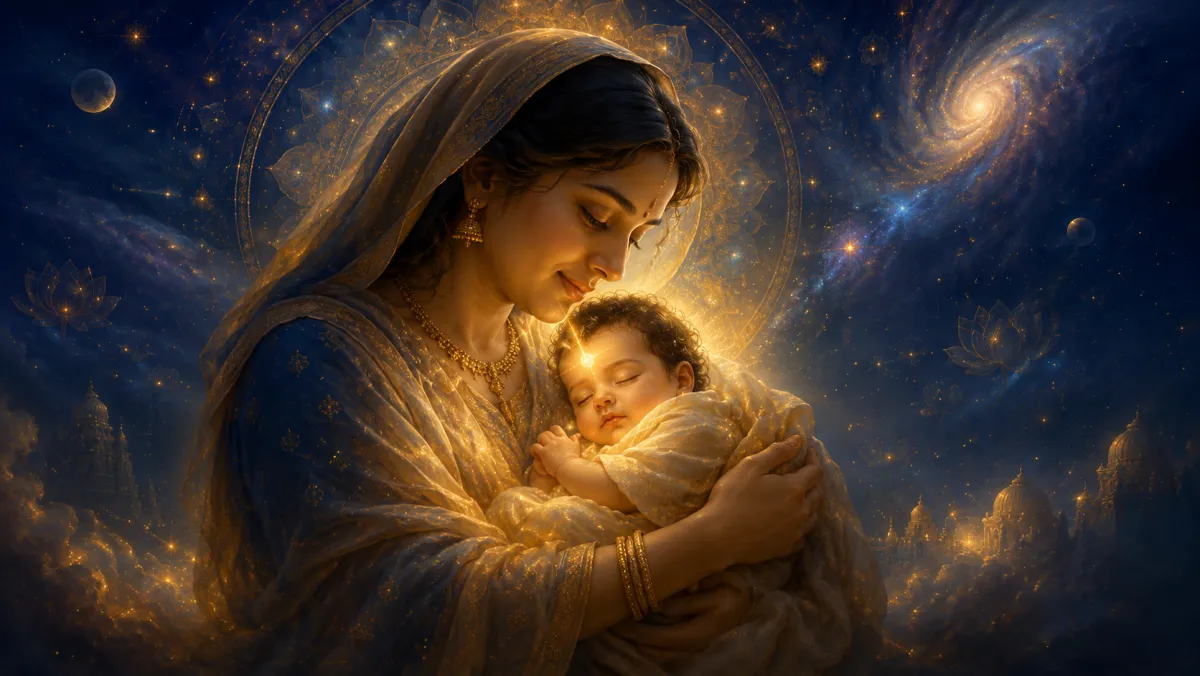
माँ
The Creator's Creator
रचनाकार की रचयिता
If you ever feel like God, go under your mother's control.
यदि कभी स्वयं को ईश्वर समझने लगो, तो माँ के अधीन हो जाओ।
Alok Mani Tripathi
May 2026
Poetry & Philosophy
आलोक मणि त्रिपाठी
मई २०२६
कविता एवं दर्शन
ॐ
॥
एक अकेला और निराकार , मन में कौंधा एक विचार
असीमित ऊर्जा का संचार , पल भर में रच डाला संसार
· · ·
फिर भी परम सुख का अभाव लिए, परम् ब्रह्म का वो स्वामी
अनोखी रचना का संकल्प किया, आदि अनंत और अन्तर्यामी
· · ·
क्रंदन करता उदित होता , निराकार को, उसकी ही रचना में आकर मिला
मर्म स्पर्श, अपार स्नेहे , रचनाकार की रचियता को, माँ का नाम मिला
· · ·
रचनाकार की नहीं होती माँ , इसका वो अभाव किया
माँ के सुख का यहः अभिलाषा , मृत्यु लोक में अवतार लिया
— आलोक मणि त्रिपाठी
Behind the Verses
Ancient texts tell us the Supreme Being takes an avatar on Earth to destroy evil or re-establish Dharma. This poem explores a deeply emotional alternative: God descended not out of duty, but out of longing — because He was moved by what humans had that He did not.
I. The Solitary Genesis
The poem opens with the traditional Vedic concept of God: Nirakaar — formless and alone. Creation was not a labored process. It was a single thought (मन में कौंधा एक विचार) backed by infinite energy that brought the entire cosmos into being in an instant.
II. The Divine Void
Despite being the Param Brahma — Supreme Lord, knower of all — He carries a profound emptiness. He possesses the universe but lacks Param Sukh, the ultimate joy. The creator of everything feels incomplete. This paradox is the engine of the poem.
III. The Creator's Creator
Here lies the soul of the poem. The all-powerful, formless God enters His own creation as a crying, helpless infant (क्रंदन करता उदित होता). The line रचनाकार की रचियता को, माँ का नाम मिला — "the creator of the Creator received the name Mother" — places a mother above God Himself. She is the one being who can give form, warmth, and boundless love to the entity that built the stars.
IV. The Motive for Incarnation
God does not have a mother. He felt that deprivation deeply. The reason He descended to the mortal realm was not for a cosmic battle or to restore universal order — it was a pure, innocent yearning: to know what a mother's love feels like. The poem asks quietly: no matter how powerful you become, even if you command the universe, are you not still bound by that need?
Even the one who created everything
longed for the one thing He had not created for Himself —
a mother.
पंक्तियों के पीछे
प्राचीन ग्रंथ कहते हैं कि परम सत्ता पृथ्वी पर अवतार लेती है — दुष्टों के संहार के लिए, या धर्म की पुनर्स्थापना के लिए। यह कविता एक गहरे भावनात्मक विकल्प की ओर संकेत करती है: ईश्वर कर्तव्य से नहीं, एक लालसा से उतरे — क्योंकि मनुष्य के पास कुछ ऐसा था जो उनके पास नहीं था।
१. एकाकी सृजन
कविता का आरंभ ईश्वर की पारंपरिक वैदिक अवधारणा से होता है: निराकार — रूपरहित और नितांत अकेला। सृष्टि कोई श्रमसाध्य प्रक्रिया नहीं थी। वह एक ही विचार था (मन में कौंधा एक विचार), जिसे असीमित ऊर्जा का बल मिला, और पल भर में समूचा ब्रह्मांड रच गया।
२. दिव्य रिक्तता
परम ब्रह्म होते हुए भी — सर्वस्वामी, सर्वज्ञ — वे एक गहरी रिक्तता लिए हुए हैं। समूचा ब्रह्मांड उनका है, पर परम सुख नहीं है। सबका रचयिता स्वयं को अपूर्ण अनुभव करता है। यही विरोधाभास इस कविता की धुरी है।
३. रचनाकार की रचयिता
यहीं इस कविता की आत्मा बसती है। सर्वशक्तिमान, निराकार ईश्वर अपनी ही रचना में एक क्रंदन करते, असहाय शिशु के रूप में प्रवेश करते हैं (क्रंदन करता उदित होता)। पंक्ति रचनाकार की रचियता को, माँ का नाम मिला माँ को स्वयं ईश्वर से ऊपर स्थापित कर देती है। वही एकमात्र सत्ता है जो उस अस्तित्व को आकार, ऊष्मा और असीम स्नेह दे सकती है जिसने तारे गढ़े।
४. अवतार का कारण
ईश्वर की कोई माँ नहीं होती। यह अभाव उन्होंने गहराई से अनुभव किया। मृत्युलोक में उनके अवतरण का कारण कोई ब्रह्मांडीय युद्ध या व्यवस्था की पुनर्स्थापना नहीं था — वह एक निश्छल, निर्दोष लालसा थी: यह जानने की कि माँ का प्रेम कैसा लगता है। कविता चुपचाप पूछती है: आप कितने ही समर्थ हो जाएँ, समूचा ब्रह्मांड आपके अधीन हो — क्या फिर भी आप इस एक आवश्यकता से बँधे नहीं हैं?
जिसने सब कुछ रचा,
वह भी उस एक के लिए तरसा
जिसे उसने अपने लिए नहीं रचा था —
एक माँ।